
Constant ear pressure, popping, or muffled hearing can wear you down, affecting sleep, focus, and comfort. Eustachian tube dysfunction does exactly that. Dr. Ryan E. Stern, MD, our board-certified ENT, offers patient-first, minimally invasive solutions to help you breathe.
Do Your Ears Pop or Crackle All Day?
Eustachian tube dysfunction (ETD) happens when the small passage connecting your middle ear to the back of your nose doesn’t open or close the way it should. This tube helps equalize pressure, drain fluid, and keep your ears comfortable. When it isn’t working properly, pressure builds up and fluid can linger. This can lead to ear fullness, popping, muffled hearing, balance issues, or discomfort that comes and goes, especially during colds, allergies, flying, or elevation changes. Symptoms may feel minor at first, but gradually worsen.
Signs & Symptoms of Eustachian Tube Dysfunction (ETD)
When the pressure-balancing system in your ears isn’t working properly, symptoms can appear in subtle or frustrating ways and may worsen with allergies, colds, or changes in elevation.
These are some of the common signs and symptoms of ETD:
- Persistent ear fullness or pressure
- Popping or crackling sounds in the ears
- Muffled or fluctuating hearing
- A feeling of fluid trapped behind the ear
- Discomfort during flying or driving through hills
- Ear pain without an active infection
- Balance issues or mild dizziness
What Causes Eustachian Tube Dysfunction (ETD)?
The eustachian tubes are small, narrow passages that connect your middle ears to the back of your nose and throat. Their job is to equalize pressure and drain fluid. When swelling, blockage, or structural issues prevent them from opening properly, pressure builds up.
Several underlying factors can interfere with healthy eustachian tube function, including:
- Chronic nasal inflammation from allergies or sinus issues
- Swelling from colds or upper respiratory infections
- Structural narrowing of the eustachian tubes
- Enlarged adenoids blocking the tube opening
- Rapid pressure changes from flying or elevation shifts
- Ongoing nasal congestion or post-nasal drip
Eustachian Tube Dysfunction (ETD) Treatment
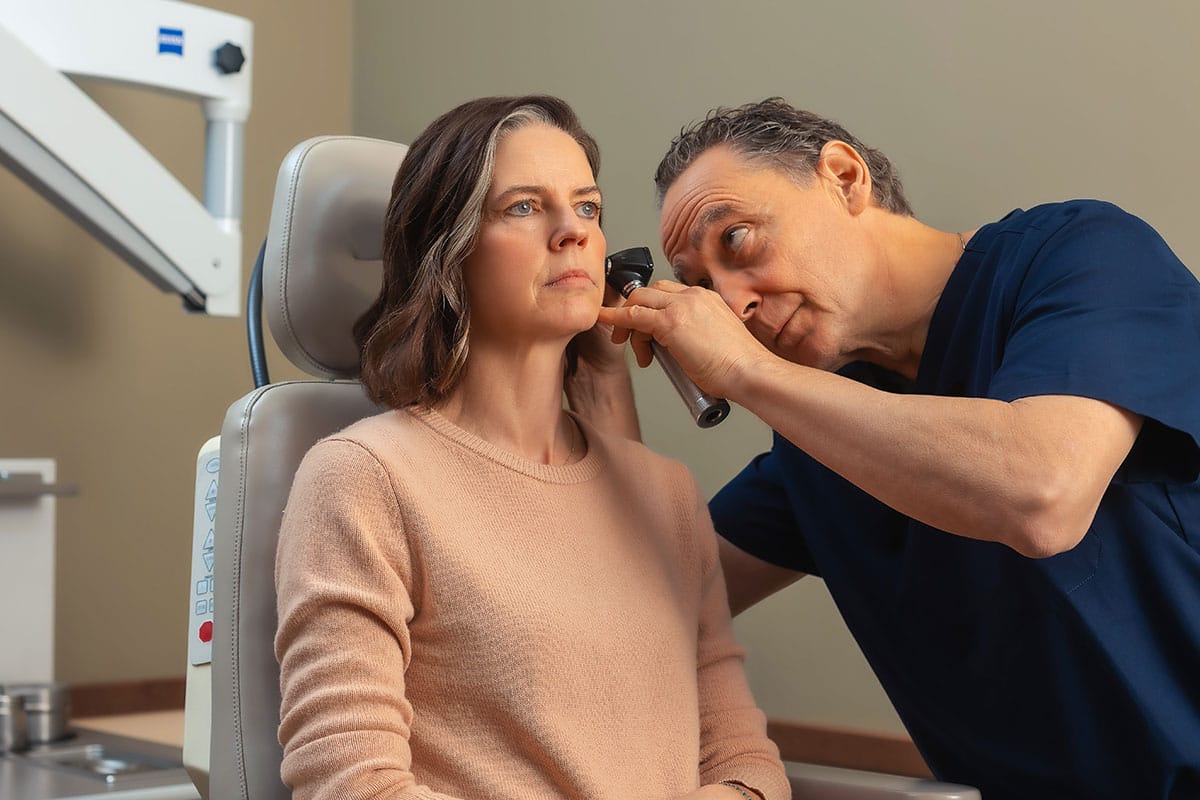
Your visit begins with a detailed, one-on-one consultation focused on how pressure, fullness, or muffled hearing is affecting your life. Dr. Stern carefully reviews your symptom history, allergy triggers, and sinus health, and then examines your ears, nose, and throat. This often includes a gentle camera exam of the nasal passages to see where the eustachian tube opens and simple pressure testing to assess how well your ears are equalizing.
Treatment is tailored to the cause of your blockage. This may include prescription nasal sprays to reduce swelling, targeted allergy treatment, or short-term medication to calm inflammation. If the tube remains narrowed, Dr. Stern may recommend eustachian tube balloon dilation, an in-office procedure that gently expands the tube to improve pressure balance and drainage. Most patients experience little downtime and gradual, lasting symptom relief.
Why Choose Dr. Stern?
Dr. Ryan E. Stern is a board-certified ENT and subspecialty-trained rhinologist with over 25 years of experience caring for patients in the Pacific Northwest. He has spent decades serving the Auburn and Federal Way communities, focusing on solutions that actually improve daily comfort. Dr. Stern is known for his minimally invasive approach, using advanced in-office techniques whenever possible to reduce downtime and speed recovery. Schedule your consultation for eustachian tube dysfunction (ETD) in Auburn or Federal Way, WA, today.
